Beyond Aesthetics: The Psychological Triggers That Drive Viewer Choice on Cam
Unpack the psychology behind why viewers choose certain cam models, focusing on Projected Availability and the Mirroring Effect to convert clicks into credits.
Key Takeaways
- How viewers choose cam models comes down to psychological connection, not appearance.
- Models who retain viewers project availability, mirror emotional energy, and use deliberate engagement techniques.
- Projected Availability is the subconscious sense that the model is genuinely interested in that specific viewer.
- The Mirroring Effect means viewers tend to feel the emotions a model displays, so genuine enjoyment matters.
- Acknowledging viewers by name and responding to chat messages consistently improves retention.
- Managing room silence and avoiding distractions like checking your phone both improve viewer engagement.
Looks Get the Click. Psychology Gets the Loyalty.
Research on live streaming behaviour consistently shows that appearance drives the first click, but psychological connection determines whether someone stays, comes back, or spends. Most models invest heavily in how they look and almost nothing in how they make people feel. That gap is where careers diverge.
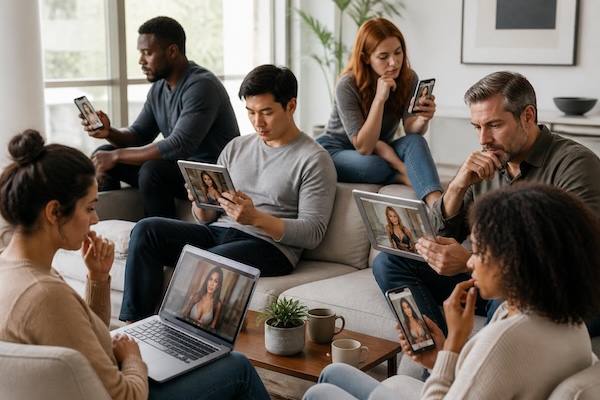
Getting attention is the easy part. Holding it requires understanding how viewers actually choose cam models, and what they're responding to beneath the surface.
Here's something that surprises a lot of people in this industry: a conventionally attractive model with weak psychological signalling will regularly underperform compared to someone less classically striking who has figured out genuine connection. It comes down to how parasocial bonds and emotional contagion shape viewer decisions, and once you understand the mechanics, they're hard to ignore.
Viewer preferences often align with recognised performer archetypes, similar to those discussed in this personality breakdown. Knowing which archetype resonates with your natural on-cam style can help you lean into the signals that already work in your favour.
Quick Answer: How viewers choose cam models is primarily driven by psychological connection, not looks. The real engine behind loyalty is Projected Availability, emotional mirroring, and deliberate engagement. Get those right, and appearance becomes a secondary factor.
Projected Availability: The Unspoken Promise That Keeps Viewers Hooked
Understanding Projected Availability in Cam Model Preferences
Think about walking into a shop and immediately feeling either welcomed or ignored. That read, based on nothing more than body language and eye contact, happens fast and shapes everything that follows. A cam room works the same way.
When it comes to how viewers choose cam models, one factor stands out: "Projected Availability", the subconscious sense that this particular model is genuinely interested in them specifically. It's a core part of the psychology behind viewer preferences, and it operates below conscious awareness.
Subtle cues matter more than you might expect. Eye contact and posture send constant background signals about approachability. Viewers pick these up even when they're not consciously looking for them.
This isn't about being online around the clock. It's about the signal you broadcast: approachability, responsiveness, the quiet message that says you're not interrupting anything by being here.
Many models accidentally send the opposite signal. A wandering gaze, a flat expression, a posture that reads as checked-out, these micro-cues register as rejection, even when nothing was intended. The viewer doesn't analyse it consciously. They just feel unwelcome and leave. Fixing these cues costs nothing except awareness, and the payoff in session length tends to be immediate.
Two models might be equally attractive on paper, but the one who looks genuinely glad you showed up will win most of the time. That's Projected Availability in action, and it's one of the central selection criteria viewers apply without realising it.
Your physical setup reinforces these signals too. Poor lighting can make even a warm expression look flat and unreadable. A quality ring light or key light does more than improve image quality: it keeps your face legible, which makes every emotional cue land harder. Viewers respond to what they can clearly see.
The Mirroring Effect: Your Vibe Is Their Experience
How Emotional Mirroring Shapes the Viewer Decision-Making Process
Here's a concept that sounds simple but runs deep: if you look like you're having fun, viewers tend to feel like they're having fun. That's the Mirroring Effect, direct emotional transfer, and it shapes the viewer experience more than almost anything else in the room.
Research on emotional contagion consistently shows that people unconsciously sync their mood with those around them. In a cam room, the model is the emotional environment. There's no crowd to blend into, no ambient energy to borrow. It's just you, which makes your internal state unusually powerful.
Don't force enthusiasm. Instead, align your internal state with the experience you want your viewer to have. That's where genuine connection actually comes from.
Think of it like a live concert. When the performer is visibly locked in, energised, present, clearly enjoying themselves, the crowd responds. The energy travels. When the performer looks like they'd rather be somewhere else, the crowd feels that too, even if the technical performance is flawless. A cam room works exactly the same way.
Models who display genuine enjoyment create an atmosphere viewers want to stay inside. People lean in, stick around longer, and spend more, not because they were persuaded to, but because the energy made them want to. That's the difference between performing and actually connecting.
Forced positivity reads as hollow almost immediately. The goal is to bring your actual internal state closer to the experience you want viewers to share. When a model seems genuinely disengaged, most viewers drift away regardless of how attractive the model is. This is one of the most consistent patterns in the psychological aspects of cam viewership.
How Viewer Preference Psychology Shapes Room Behaviour
Once you start seeing your room through a psychological lens, every on-cam decision looks different. That shift is what separates models who build lasting audiences from those stuck in a cycle of one-time visitors.
Viewers rarely evaluate models consciously. They respond to signals: emotional warmth, perceived attention, the sense that their presence matters. These signals explain what drives cam viewer choice far more reliably than aesthetics ever could.
It's also worth recognising that viewers tend to self-select based on personality fit. Modern platforms such as Chatterbate.net are designed to surface these personality-driven streams more effectively, making it easier for the right viewers to find the right model from the start.
Emotional cues, not appearance, are usually the deciding factor in whether someone stays, returns, or spends. Knowing that gives you something concrete to work with.
Auditing Your Room's Psychological Signals
Key Signals That Drive Cam Model Selection Criteria
- Thumbnail Calibration: Your thumbnail is your storefront window. It should communicate approachability, energy, and a clear invitation, not just attractiveness. A warm expression with good lighting will consistently outperform a technically "perfect" shot that reads as cold. Even a basic ring light makes a visible difference in thumbnail quality.
- Initial Eye Contact: A direct, welcoming look into the camera is an unspoken acknowledgement. It says I see you, and that tends to matter more than models expect. Make it your default opening posture.
- The Name-Drop Welcome: Greeting regulars and new viewers by name creates an immediate sense of recognition. It signals that this isn't a broadcast, it's a conversation. Viewers acknowledged by name within the first few seconds consistently show higher session retention across most room types.
- Boundary Setting: Clearly defined limits, calmly communicated, make the room safer for everyone, including you. Far from being confrontational, it's the foundation of mutual respect and a more consistent viewer experience.
- The Gratitude Loop: Genuine appreciation for tips and private shows reinforces the behaviour you want to see more of. Positive reinforcement works, which is why loyalty programmes exist in every industry.
Scripts That Actually Work (And Sound Like You)
These are frameworks, not word-for-word scripts. Adapt the language until it genuinely sounds like you. Having a ready response for common room situations means you're not improvising under pressure when it counts.
- New Viewer Hook: "Welcome, [username]! So glad you're here tonight, what brings you to my room?" It's open-ended and immediately invites a two-way exchange rather than a one-way broadcast.
- Tipping Reinforcement: "Thank you so much, [username], that tip genuinely means a lot. It helps me [specific goal]. What would you like to see next?" This ties the tip to a real purpose and opens the door to further interaction rather than letting the moment pass.
- Re-Engagement Script for Quiet Rooms: "It's a little quiet in here right now, which I actually love, because it means we can really talk. [Username], what's been the best part of your day?" This breaks the silence without drawing attention to low numbers, reframes the quiet as intimate, and pulls a specific viewer into the conversation.
- Boundary-Setting Script: "I want everyone to have a great time in here, so just a quick note: I don't do [specific request], but I'm always happy to [alternative you do offer]. Thanks for keeping it respectful, it really does make the room better for everyone." Calm, matter-of-fact, and it sets the tone you want the rest of the room to follow.
Optimising Your Presence for Psychological Impact
Where you start depends on where you are. Here's a practical split based on experience level. Pick the tier that fits and go from there.
- For Beginners: Start with thumbnail lighting and commit to responding to every chat message this week, even a quick emoji counts. Consistent responsiveness builds trust faster than almost anything else. It signals to viewers that their presence registers, and that compounds quickly. If your room looks dim or flat, a simple lighting upgrade is one of the highest-return investments you can make at this stage. It sharpens your image and makes your expressions far more readable on screen.
- For Advanced Models: Work on micro-expressions, the fleeting facial cues that communicate emotion before you've said a word. Equally important: learn to manage room silence without looking disengaged. This is genuinely hard to self-diagnose, which is exactly where recording yourself pays off. Most experienced models are surprised by what they see on playback. It's also worth auditing your camera angle and image quality. A sharper webcam can make the difference between a room that feels professional and one that feels amateur, regardless of experience level.
Psychological Mistakes That Drive Viewers Away
- Looking at your phone: Even a glance signals disinterest. It reads as "something else is more important right now", and few things kill viewer momentum faster.
Don't overlook non-tippers. They're your potential loyal regulars. Acknowledging everyone, regardless of spend, is one of the more reliable ways to build a strong room community. - Ignoring non-tippers entirely: Casual viewers are your pipeline. When they go unacknowledged, they don't convert, and you're quietly shrinking your potential audience without realising it.
- The static face: No expression, no energy, no invitation. If the room feels flat, viewers feel it too, and most will leave without a word. A neutral expression is rarely read as neutral; it usually reads as indifference.
Recognising these patterns is the first step. The action plan below gives you the specific moves to apply in your next stream.
Your Action Plan
- Watch your last recorded stream critically: Don't just view it, analyse it. Mark the moments where your energy dropped or a connection opportunity slipped past. You'll likely spot patterns you weren't aware of.
- Identify the dead air: Find the silences where engagement flatlined. Those are your insertion points: a direct question, a specific name-drop, a spontaneous thought. Have a plan for what you'll do there next time.
- Apply the five-second rule: Within five seconds of a new viewer entering, acknowledge them, ideally by name. It's a small habit that adds up into a room with noticeably different energy over time.
- Pick one script and use it tonight: Choose the re-engagement script or the new viewer hook from the section above. Run it in your next stream and pay attention to what shifts, in chat activity, room energy, and how long viewers stay.
Understanding how viewers choose cam models, and the psychology behind those preferences, is a real, practical edge. It's not about being the most striking face in the browse grid. It's about Projected Availability, emotional mirroring, and the viewer decision-making process playing out in real time, every stream. The cam model selection criteria that actually drive loyalty are all learnable skills. They're also what separate models who build sustainable careers from those stuck chasing new traffic.
Apply these steps consistently and the results don't just add up, they build on each other, creating the kind of loyal audience that makes this career both sustainable and worth showing up for.
Frequently Asked Questions
What is the most important factor in viewer retention on cam?
Viewer retention is primarily driven by psychological connection, how a model makes viewers feel, rather than physical appearance. Models who create a genuine sense of warmth and interest hold audiences far more effectively than those relying on looks alone.
What is "Projected Availability"?
"Projected Availability" is the subconscious sense among viewers that a cam model is genuinely interested in them specifically. It's communicated through approachability, eye contact, and responsiveness, not just being online constantly. Think of it as the feeling you get when someone in a room makes you feel like the most important person there.
How does the Mirroring Effect influence viewer choice?
The Mirroring Effect means viewers tend to feel the emotions a model displays. When a model appears to be genuinely enjoying themselves, viewers are more likely to share that experience, staying longer and engaging more. It's the same dynamic that makes some live performers electric and others forgettable, even at the same skill level.
What are some practical tips for engaging new viewers?
Acknowledge new viewers by name as quickly as possible, and use an open-ended opener such as "Welcome, [username]! So glad you're here tonight, what brings you to my room?" It's simple, but it consistently outperforms generic welcomes because it signals that the viewer's presence was specifically noticed.
Why is responding to chat messages important?
Consistent responsiveness, even a quick emoji reaction for beginners, builds trust quickly and signals to viewers that their presence matters. It's one of the most reliable ways to improve engagement and loyalty, and it costs nothing except attention.
What are common psychological mistakes that can hurt a cam room?
Checking your phone on camera, ignoring non-tippers, and displaying a flat or disengaged expression are among the most common missteps. Each one sends a subtle signal of disinterest, and viewers respond by leaving, usually without saying why.
Other great posts in 'None' topic
- 29 Sep 2026 - What I Like About Swinger Amateur Porn
- 22 Sep 2026 - FFM Threesomes In Amateur Versus Professional Porn
- 22 Sep 2026 - A Special Surprise For My Husband In New York
- 09 Sep 2026 - Porn That’s Better On Computer (My Preferences)
- 25 Aug 2026 - Dating and Marriage in Egypt: Choosing a Path That Can Last